Community progress in bringing back one of London's rarest plants
4 June 2026
Earlier this year, we joined a London-wide collaborative conservation programme bringing together people and organisations across London to protect and restore tower mustard (Turritis glabra), one of the UK’s rarest native plants.
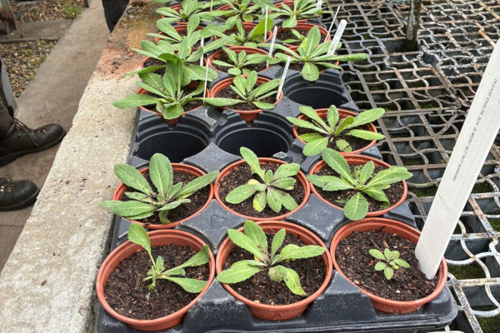
Over the past three months, over 50 community volunteers - Tower Mustard Guardians - have been nurturing seedlings from one of the last remaining wild populations at Stain Hill Reservoir in Hampton. The seedlings are being grown in simple, low nutrient conditions similar to their natural habitat, and by autumn they’ll be ready to be reintroduced at Barnes Common, Wimbledon Common, Hounslow Heath and Home Park.
Clare Hydes, Forest School Co-ordinator and Sustainability Lead at Ewell Castle Prep School and one of our Tower Mustard Guardians, said of her involvement in the project:
“I signed up for the Tower Mustard project via [project leaders] Citizen Zoo who I've previously volunteered with. Pupils from Ewell Castle Prep have also been involved previously in [local conservation] projects; fundraising for the reintroduction of water voles on the Hogsmill river and planting at the Chamber Mead wetlands as well as visiting the Tolworth rewilding site.
Children are naturally curious about nature and these kind of projects are a great way of sparking interest. Charlotte at [project partner] Habitats for Heritage was generous enough to give me some extra seeds to take back to school and get the pupils involved in planting which we have done - about a month ago now.
We are trying to maximise success by keeping a couple of trays in the plastic greenhouse and another indoors in a child-free attic office! We have little seedlings sprouted in all three trays.”
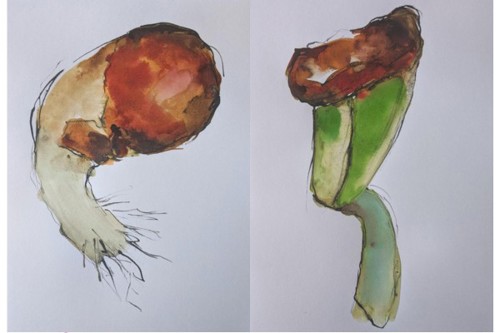
Local artist Nicki Rolls, who is also a volunteer on the project, has been growing tower mustard at home and producing large-scale charcoal drawings of the different stages of plant development. She said:
“I was excited when I learnt about this project as I thought it would be inspiring to draw one of the UK's rarest native plants - as it grows. Little did I know how tiny the seeds would be! But with a magnifying glass I have been able to observe and draw the tiny seedlings - it has been fascinating seeing them close up as they develop.”
We’re grateful for the community effort behind this programme and will continue supporting the conservation programme as it progresses. This summer, we’ll lead ongoing monitoring of the parent plants at Stain Hill Reservoir, where we hope to gather even more seeds for the next phase of restoration.
Share this
Up to: June 2026
Updated: 4 June 2026