World Rivers Day: We're working with the Beverley Brook to reduce flood risk
25 September 2026
Word Rivers Day, celebrated on Sunday 27 September, is an opportunity to celebrate the rivers and waterways that are such an important part of our local environment – and recognise how they can help us to manage water and reduce local flood risk.
Here in Richmond upon Thames, the Beverley Brook is an important part of our local landscape. Understanding how water moves through the brook and the wider catchment is helping us find ways to make the area more resilient to flooding.
The Beverley Brook is an 8.9 mile river that rises at Cuddington Recreation Ground in Worcester Park and flows through Sutton, Kingston, Merton, Wandsworth and Richmond, before joining the River Thames.
As the brook passes through a largely urban area, much of the rain that falls on roads, buildings and other hard surfaces cannot soak into the ground. Instead, it can runoff into the drainage network and river. This means the Beverley Brook can respond quickly to heavy rainfall, with water levels rising rapidly – which is why it is known as a ‘flashy’ urban river.
This can be particularly challenging when heavy rain coincides with a high tide in the River Thames, as there is less capacity for water to flow out of the Beverley Brook, which can contribute to higher water levels in the river.
The brook has two underground flood relief channels, which provide additional capacity for storing water when river levels are high. These existing channels are an important part of the area’s flood protection, but managing flood risk effectively requires a range of measures. This includes making space for water along the river and slowing the flow, as well as finding ways to store rainwater across the wider catchment before it reaches the brook and drainage network.
Making more space for water
Through the Community BlueScapes programme, Richmond Council and its partners are taking action to help manage water and reduce flood risk, while also improving the river environment and creating better habitats for wildlife.
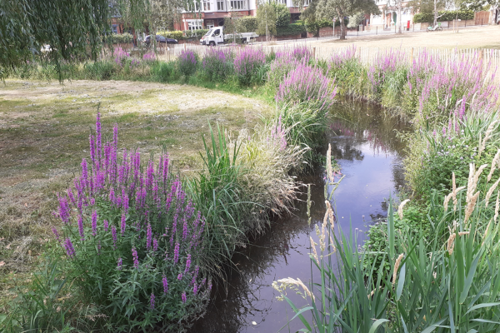
At Barnes Green, the Beverley Brook has been restored to create a more natural, winding channel and reconnect the river with part of its historic floodplain. This gives the river more space during periods of high flow, allowing water to spread out and helping to reduce pressure on the channel which lowers flood risk.
At Barnes Common, new reedbeds have been installed to store water and slow the flow of the Beverley Brook to help prevent flooding, while also filtering pollutants from the water, improving habitats and supporting wildlife.
These projects focus directly on the river and its surroundings, using natural processes to help manage water and improve the river environment.
Managing rainwater before it reaches the river
Alongside the work on the river, managing rainwater elsewhere in the catchment can help reduce the amount of water reaching the Beverley Brook and drainage network during heavy rainfall.
Sustainable drainage systems, or SuDS, are designed to capture rainwater and slow down the rate at which it enters drainage systems and rivers. They can also allow water to soak into the ground and can help to remove pollutants from rainwater.
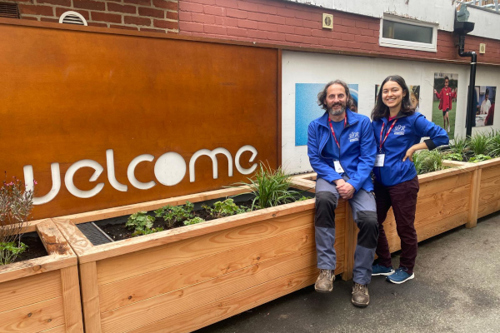
There are already examples of SuDS across the borough, including the rain garden on Barnes High Street and downpipe planters at Lowther Primary School. While these features are much smaller than river restoration and reedbed installation projects, they are part of a wider effort to manage rainfall closer to where it falls, rather than allowing large amounts of water to reach the river and drainage network all at once.
Together, these different projects can help the Beverley Brook catchment respond better to heavy rainfall – while also creating healthier rivers, better habitats and greener places for people and wildlife.
This World Rivers Day, take a moment to discover the waterways on your doorstep and consider the important role they play in our local environment – from supporting wildlife and improving water quality, to helping us manage water and reduce flood risk.
Share this
Up to: September 2026
Updated: 25 September 2026